
CCCC‑Vehicle Automatic Counting & Volume‑measurement Rob
Project Background
CCCC large‑scale northern infrastructure site bears heavy earth‑rock and sand transshipment workload. Numerous engineering dump trucks transport earthwork materials. Located in open northern wilderness, the site suffers from severe cold in winter and heavy sand‑dust in spring and autumn with large day‑night temperature difference. Traditional weighbridge‑plus‑manual‑registration mode causes long vehicle queuing and heavy on‑site labor. Weighbridge maintenance becomes difficult under low‑temperature and dusty conditions. The project requires a non‑stop 3D‑scanning vehicle volume‑measurement robot for digital earth‑rock transport management.
Project Pain Points
- Harsh northern wilderness conditions: extreme cold winter, heavy sand‑dust, huge temperature difference, requiring cold‑resistant and dust‑proof hardware.
- Low weighbridge throughput: trucks have to stop and queue, resulting in gate congestion and delayed material transportation.
- High manpower cost: 24‑hour on‑site attendants are required for weighbridge registration across scattered working zones.
- Difficult volume verification: Only trip quantity is recorded without real‑load‑volume data, making it hard to detect under‑loading and causing large accounting deviation.
- Insufficient traceable evidence: Lack of 3D scanning data and snapshots for volume‑dispute investigation.
Solution
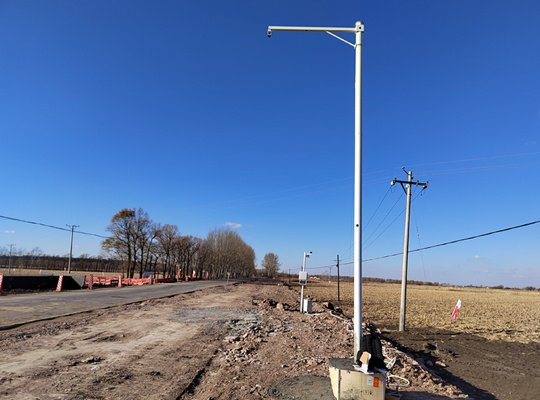
Chongqing Jinyun Machinery deployed Vehicle Automatic Counting & Volume‑measurement Robot for CCCC infrastructure project. Pole‑mount integrated laser 3D‑scanning hardware is adopted without weighbridge foundation. Engineering trucks pass at low speed without stop. License‑plate recognition, 3D‑laser volume calculation, trip counting and snapshot capture are completed synchronously, with data uploaded to cloud platform in real time.
Hardware Advantages
‑ Industrial cold‑resistant & dust‑proof hardware for all‑weather 7×24‑hour stable operation under cold and dusty open‑air construction environment.
‑ Light‑weight pole‑mount installation with minimal civil work, fast deployment, adaptable to temporary site roads and support equipment migration & reuse after project completion.
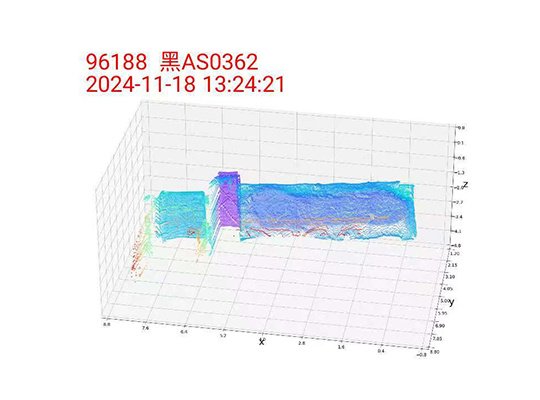
‑ Laser 3D scanning generates cargo point‑cloud model to restore material stacking shape and calculate actual loading volume precisely.
‑ Fusion of camera and laser sensor maintains stable performance under strong light, backlight and dusty atmosphere.
Core Software Functions
- 3D‑laser volume measurement: Generate 3D point‑cloud model and calculate actual earth‑rock loading volume as vehicles pass through.
- License‑plate recognition & auto counting: Identify plate number, accumulate transport trips and distinguish empty‑loaded / fully‑loaded status.
- Multi‑dimensional data archiving: Cloud storage of 3D scanning model, vehicle snapshots bound with plate number, timestamp and measured volume.
- Cloud transport‑detail platform: Check trip records, measured volume and time on PC & mobile terminals. Auto‑generate statistical reports with data export support.
- Abnormity alarm: Mark records of under‑loading or over‑height vehicles for supervisor review.
On‑site Application Effect
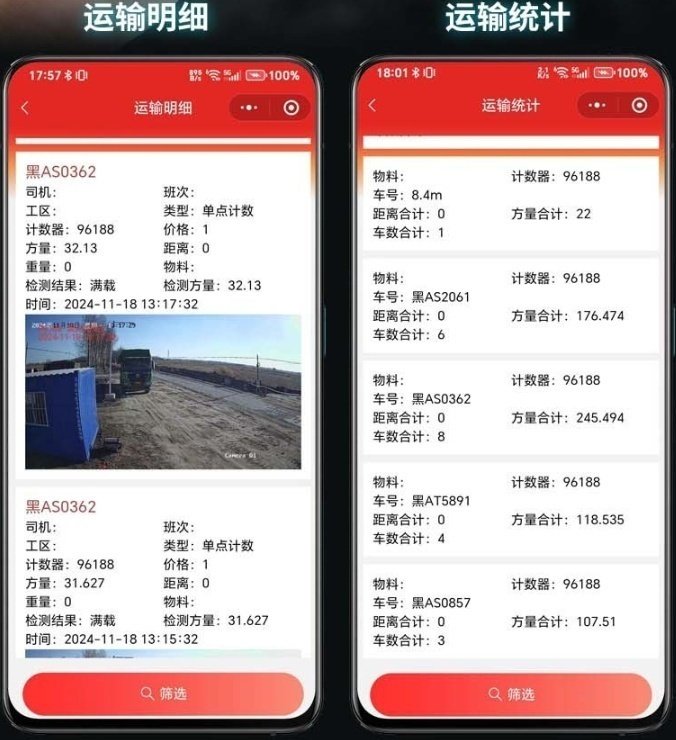
After deployment, engineering trucks finish 3D scanning, plate recognition and trip statistics without stopping.
Dependence on physical weighbridge and weigh‑house attendants is eliminated. Gate traffic efficiency is greatly improved. Real‑load‑volume derived from 3D scanning replaces simple trip‑based estimation and effectively avoids under‑loading risks.
3D point‑cloud data and snapshots are fully archived as valid evidence for volume disputes. The equipment runs steadily under cold and dusty northern site conditions and realizes integrated digital management for earth‑rock transport counting & volume measurement.
Customer Benefits
- Efficiency improvement & cost saving: Non‑stop vehicle passage eliminates queuing and cuts on‑site staffing.
- Reliable volume acquisition: Laser 3D scanning acquires real loading volume for accurate earthwork accounting instead of trip‑only estimation.
- Harsh‑climate adaptability: Cold‑resistant and dust‑proof hardware fits northern open‑air construction sites.
- Complete traceability: Dual archives of 3D point‑cloud model and snapshots resolve volume disputes.
- Flexible deployment & reuse: Pole‑mount design adapts to temporary roads; equipment can be migrated to other construction zones.